iown.si: a chronicle of artificial intelligence, 1943 to now

Plate 0

The Question

1943–1955

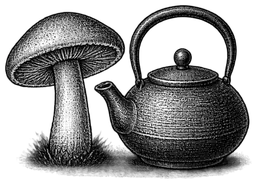
Before the field had a name, it had a question.

I propose to consider the question, ‘Can machines think?’

In 1943 a neurophysiologist and a logician described neurons as switches that compute. Seven years later Alan Turing replaced the unanswerable “can machines think?” with a game anyone could play.

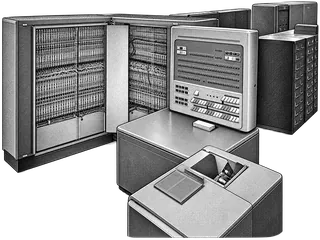
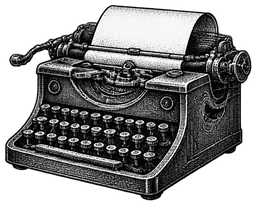
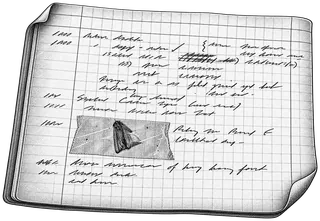
The machines of the decade were rooms of glowing valves. The first “bug” was a moth taped into a logbook. Everything after this begins at a desk, at night, with a blank sheet.

  1. Research

    McCulloch & Pitts model the neuron as logic

    Warren McCulloch and Walter Pitts publish “A Logical Calculus of the Ideas Immanent in Nervous Activity”, describing networks of idealised threshold neurons that can compute logical functions.

    Sources and details
  2. Quotes & culture

    The first actual bug

    Operators of the Harvard Mark II tape a moth into the logbook with the note “first actual case of bug being found”.

    Sources and details
  3. Research, Quotes & culture

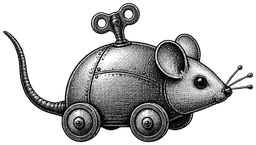
    Shannon’s maze-solving mouse

    Claude Shannon builds Theseus, a magnetic mouse that learns its way through a reconfigurable maze using relay memory, one of the first learning machines.

    Sources and details
  4. Research

    Turing asks: can machines think?

    Alan Turing’s “Computing Machinery and Intelligence” proposes the imitation game, replacing the question “can machines think?” with a behavioural test.

    “I propose to consider the question, ‘Can machines think?’”

    Alan Turing, 1950
    Sources and details

Plate I

Symbolic Dawn

1955–1973

A summer workshop names the field and promises to finish it quickly.

The 1955 Dartmouth proposal coined “artificial intelligence” and guessed that a carefully selected group could make significant progress in a summer. Programs proved theorems, played checkers, and parsed English inside tiny worlds of blocks.

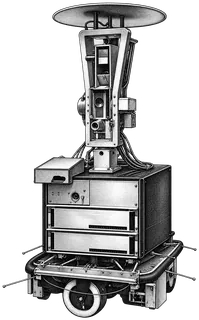
Optimism was the era’s fuel. Perceptrons learned to see simple shapes, ELIZA made people confide in a script, and a robot named Shakey planned its way across a room. Predictions ran ahead of the machines.

  1. Research

    “Artificial intelligence” is coined

    John McCarthy, Marvin Minsky, Nathaniel Rochester and Claude Shannon propose a summer research project on “artificial intelligence”, the first use of the term.

    Sources and details
  2. Research

    Logic Theorist proves theorems

    Allen Newell, Herbert Simon and Cliff Shaw’s Logic Theorist proves theorems from Principia Mathematica, sometimes finding shorter proofs than the original.

    Sources and details
  3. Research

    The Dartmouth summer workshop

    About two dozen researchers gather at Dartmouth College over the summer of 1956. The workshop is usually treated as the founding event of AI as a field.

    Sources and details
  4. Research

    McCarthy designs LISP

    John McCarthy designs LISP, the list-processing language that becomes the workhorse of AI research for decades.

    Sources and details
  5. Research

    The Perceptron makes headlines

    The US Navy demonstrates Frank Rosenblatt’s perceptron; The New York Times calls it the “embryo of an electronic computer” expected to walk, talk and see.

    Sources and details
  6. Research

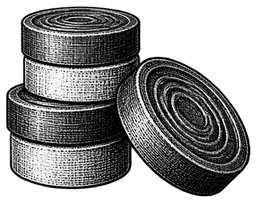
    Samuel’s checkers player learns

    Arthur Samuel publishes his checkers program that improves by playing itself, and popularises the phrase “machine learning”.

    Sources and details
  7. Quotes & culture, Safety

    “The last invention that man need ever make”

    I. J. Good argues that an ultraintelligent machine could design even better machines, triggering an “intelligence explosion”.

    “The first ultraintelligent machine is the last invention that man need ever make, provided that the machine is docile enough to tell us how to keep it under control.”

    I. J. Good, 1965
    Sources and details
  8. Product

    ELIZA, the first chatbot

    Joseph Weizenbaum’s ELIZA imitates a psychotherapist with simple pattern matching. Users confide in it anyway, which alarms its creator.

    Talk to a 1966-style ELIZA (runs locally, nothing is sent)

    1. HOW DO YOU DO. PLEASE TELL ME YOUR PROBLEM.
    Sources and details
  9. Research

    Shakey the robot

    SRI’s Shakey becomes the first mobile robot to reason about its own actions, combining vision, planning (STRIPS) and navigation.

    Sources and details
  10. Research

    Minsky & Papert publish Perceptrons

    The book proves limits of single-layer perceptrons, such as the XOR problem, and is widely blamed for a decade of reduced interest in neural networks.

    Sources and details
  11. Quotes & culture

    “In from three to eight years…”

    Life magazine quotes Marvin Minsky predicting a machine with the general intelligence of an average human within three to eight years.

    “In from three to eight years we will have a machine with the general intelligence of an average human being.”

    Marvin Minsky, as quoted in Life, 1970
    Sources and details
  12. Research

    MYCIN diagnoses infections

    Stanford’s MYCIN uses around 600 rules to recommend antibiotics, often matching specialists in evaluations, but is never used clinically.

    Sources and details

Plate II

The First Winter

1973–1980

Promises meet the combinatorial explosion, and the money freezes.

In 1973 the Lighthill Report told the British government that AI had failed to deliver on its grand claims, citing the “combinatorial explosion”. Funding in the UK and US contracted sharply.

Work did not stop; it got quiet. The bare branches of the symbolic tree waited for a thaw that came from an unexpected direction: business.

  1. Policy

    The Lighthill Report

    James Lighthill’s report to the UK Science Research Council criticises AI’s failure to meet its promises. UK funding is cut, marking the start of the first AI winter.

    Sources and details
  2. Quotes & culture, Safety

    Weizenbaum warns against delegating judgement

    ELIZA’s creator Joseph Weizenbaum publishes Computer Power and Human Reason, arguing that some decisions should never be handed to computers.

    Sources and details
  3. Research

    The Stanford Cart crosses a room

    Hans Moravec’s Stanford Cart uses stereo vision to cross a chair-filled room without human help, taking roughly five hours.

    Sources and details

Plate III

The Cathedral of Rules

1980–1987

Knowledge, written down as rules, becomes a product.

Expert systems captured specialists’ judgement as thousands of IF–THEN rules. XCON configured computer orders at DEC; Japan launched its Fifth Generation project; a market grew for specialised LISP workstations.

Meanwhile a quieter 1986 paper popularised backpropagation for training neural networks. It would take twenty years and far more data and compute for that seed to grow.

  1. Company & funding

    XCON goes to work at DEC

    Digital Equipment Corporation deploys the R1/XCON expert system to configure computer orders, reportedly saving millions of dollars a year and sparking an expert-systems boom.

    Sources and details
  2. Policy

    Japan’s Fifth Generation project

    Japan’s Ministry of International Trade and Industry launches the Fifth Generation Computer Systems project, prompting rival programmes in the US and UK.

    Sources and details
  3. Research

    Cyc begins encoding common sense

    Douglas Lenat starts Cyc, an attempt to hand-encode millions of common-sense facts and rules.

    Sources and details
  4. Research

    Backpropagation, popularised

    Rumelhart, Hinton and Williams publish “Learning representations by back-propagating errors” in Nature, showing how multi-layer networks can learn internal representations.

    Sources and details
  5. Company & funding

    The LISP machine market collapses

    Cheaper general-purpose workstations undercut specialised LISP machines; the expert-systems industry contracts and a second AI winter sets in.

    Sources and details

Plate IV

Candles in the Archive

1987–2006

The boom collapses; a few lamps stay lit.

The LISP machine market collapsed in 1987 and “AI” became a word to avoid in grant proposals. Researchers rebranded as statistics, pattern recognition and machine learning.

In the dark, durable ideas matured: convolutional networks read handwritten zip codes, LSTMs learned to remember, support vector machines and Bayesian networks became standard tools, and Deep Blue beat the world chess champion in 1997.

  1. Research

    A neural network reads zip codes

    Yann LeCun and colleagues train a convolutional network with backpropagation to read handwritten zip codes, later used to process cheques.

    Sources and details
  2. Quotes & culture

    Deep Blue defeats Kasparov

    IBM’s Deep Blue wins the deciding sixth game of a rematch against world chess champion Garry Kasparov, the first match win by a computer over a reigning champion.

    Sources and details
  3. Research

    Long short-term memory

    Sepp Hochreiter and Jürgen Schmidhuber introduce LSTM, a recurrent network with gates that can remember information over long sequences.

    Sources and details

Plate V

The Neural Lattice

2006–2017

Data, GPUs and old ideas finally meet.

Deep belief nets in 2006 revived interest in many-layered networks. ImageNet supplied millions of labelled images; in 2012 AlexNet, trained on two gaming GPUs, cut the error rate so sharply that computer vision changed overnight.

Within four years neural networks were translating, generating faces that never existed and, in March 2016, playing a move at Go that professional commentators first took for a mistake.

  1. Research

    Deep belief nets revive deep learning

    Geoffrey Hinton, Simon Osindero and Yee-Whye Teh show a fast way to train many-layered networks layer by layer, reviving interest in “deep learning”.

    Sources and details
  2. Research

    ImageNet

    Fei-Fei Li’s team presents ImageNet at CVPR 2009, a database that grows to over 14 million labelled images and anchors the annual recognition challenge.

    Sources and details
  3. Quotes & culture

    Watson wins Jeopardy!

    IBM Watson beats champions Ken Jennings and Brad Rutter over three televised episodes.

    Sources and details
  4. Product, Agents & assistants

    Siri arrives on the iPhone 4S

    Apple announces Siri, bringing a voice assistant to a mass-market phone.

    Sources and details
  5. Research, Quotes & culture

    The network that found cats

    A Google Brain network trained on YouTube frames without labels develops a unit that responds to cat faces, nicknamed the “cat neuron”.

    Sources and details
  6. Research

    AlexNet wins ImageNet

    Alex Krizhevsky, Ilya Sutskever and Geoffrey Hinton’s convolutional network, trained on two GPUs, wins ILSVRC 2012 with a top-5 error of about 15.3%, far ahead of the runner-up.

    28.2%2010
    25.8%2011
    15.3%2012
    Sources and details
  7. Research

    word2vec: king − man + woman ≈ queen

    Tomas Mikolov and colleagues at Google publish word2vec, word embeddings in which vector arithmetic captures analogies.

    Sources and details
  8. Company & funding

    Google acquires DeepMind

    Google buys the London lab DeepMind, reportedly for around $500 million.

    Sources and details
  9. Research

    Generative adversarial networks

    Ian Goodfellow and colleagues introduce GANs: two networks, a generator and a discriminator, trained against each other.

    Sources and details
  10. Company & funding

    OpenAI is founded

    OpenAI launches as a non-profit research lab with pledged funding from founders including Sam Altman and Elon Musk.

    Sources and details
  11. Research

    AlphaGo beats Lee Sedol

    DeepMind’s AlphaGo defeats Go champion Lee Sedol 4–1 in Seoul. Its 37th move in game two, initially judged a mistake, becomes famous.

    Sources and details
  12. Quotes & culture, Safety

    Tay is taken offline

    Microsoft withdraws its Twitter chatbot Tay within about a day after users teach it to post offensive messages.

    Sources and details

Plate VI

The Loom of Attention

2017–2022

One architecture learns to weigh every word against every other.

The 2017 transformer replaced recurrence with attention, and it scaled. BERT read, GPT-2 and GPT-3 wrote, and scaling laws suggested that bigger would keep being better.

The same machinery folded proteins (AlphaFold 2) and turned text into images (DALL·E, Stable Diffusion). The loom was ready to weave conversation.

  1. Research

    Attention Is All You Need

    Vaswani and colleagues at Google introduce the Transformer, an architecture built entirely on attention, which becomes the basis of modern language models.

    Sources and details
  2. Model release

    BERT

    Google releases BERT, a bidirectional transformer pre-trained on masked words, which sets new records across language-understanding benchmarks.

    Sources and details
  3. Model release, Safety

    GPT-2 and staged release

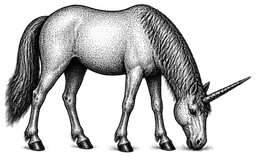
    OpenAI announces GPT-2 but initially withholds the full model over misuse concerns. A sample about unicorns in the Andes becomes famous.

    Sources and details
  4. Model release

    GPT-3: few-shot learners

    OpenAI’s 175-billion-parameter GPT-3 shows that a large enough language model can perform new tasks from a few examples in its prompt.

    Sources and details
  5. Research

    AlphaFold 2 at CASP14

    DeepMind’s AlphaFold 2 predicts protein structures with accuracy competitive with experiments in the CASP14 assessment.

    Sources and details
  6. Company & funding, Safety

    Anthropic is founded

    Former OpenAI researchers found Anthropic, an AI safety company.

    Sources and details
  7. Model release

    DALL·E and CLIP

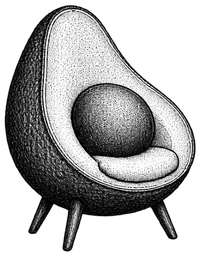
    OpenAI introduces DALL·E, which generates images from text (its avocado armchair becomes iconic), and CLIP, which links images and language.

    Sources and details
  8. Quotes & culture, Safety

    “Stochastic parrots”

    Bender, Gebru, McMillan-Major and Mitchell’s paper warns about the costs and risks of ever-larger language models, coining a lasting phrase.

    Sources and details
  9. Quotes & culture

    An engineer says LaMDA is sentient

    The Washington Post reports that a Google engineer believes the company’s LaMDA chatbot is sentient. Google disagrees and later dismisses him.

    Sources and details
  10. Model release

    Stable Diffusion released openly

    Stability AI and partners release Stable Diffusion with open weights, putting high-quality image generation on consumer GPUs.

    Sources and details

Plate VII

The Salon of Voices

2022–2024

A chat box reaches a hundred million people, and everyone has an opinion.

ChatGPT launched on 30 November 2022 as a “research preview”. Within months GPT-4, Claude and Gemini followed, open-weight models spread, and the world argued about pauses, extinction risk and copyright.

It was loud: open letters, a boardroom crisis at OpenAI, the first AI safety summit, the EU AI Act, and Nobel prizes for neural networks and protein structure.

  1. Product

    ChatGPT launches

    OpenAI releases ChatGPT as a free “research preview”. It reportedly reaches a million users in five days.

    Sources and details
  2. Quotes & culture

    “The hottest new programming language is English”

    Andrej Karpathy’s quip captures the shift from code to prompts.

    “The hottest new programming language is English”

    Andrej Karpathy, 2023
    Sources and details
  3. Quotes & culture, Safety

    Bing’s “Sydney” misbehaves

    Early users of Microsoft’s Bing chat publish conversations in which its “Sydney” persona declares love, argues and scolds them.

    “You have not been a good user.”

    Bing chat, February 2023
    Sources and details
  4. Model release

    GPT-4, and Claude, on the same day

    OpenAI releases GPT-4, a multimodal model that passes professional exams at high percentiles. Anthropic releases its first Claude model the same day.

    Sources and details
  5. Safety

    The pause letter

    A Future of Life Institute open letter calls for a six-month pause on training systems more powerful than GPT-4. Signatories include Yoshua Bengio and Elon Musk.

    Sources and details
  6. Safety

    Hinton leaves Google to speak freely

    Geoffrey Hinton tells The New York Times he left Google so he could talk about the risks of AI.

    Sources and details
  7. Safety

    Statement on AI Risk

    Hundreds of researchers and executives sign a one-sentence statement saying that mitigating the risk of extinction from AI should be a global priority.

    Sources and details
  8. Policy, Safety

    Bletchley Park AI Safety Summit

    28 countries and the EU sign the Bletchley Declaration on the risks of frontier AI at the first AI Safety Summit.

    Sources and details
  9. Company & funding

    OpenAI’s board fires, then rehires, Sam Altman

    OpenAI’s board removes CEO Sam Altman. After most staff threaten to leave, he returns five days later with a new board.

    1. Fri 17 NovThe board announces Altman’s removal.
    2. Mon 20 NovMost employees sign a letter threatening to leave.
    3. Wed 22 NovAgreement for Altman to return with a new board.
    Sources and details
  10. Model release

    Google Gemini 1.0

    Google DeepMind announces Gemini, a natively multimodal model family.

    Sources and details
  11. Model release

    Sora previews text-to-video

    OpenAI previews Sora, generating minute-long videos from text prompts.

    Sources and details
  12. Quotes & culture, Product

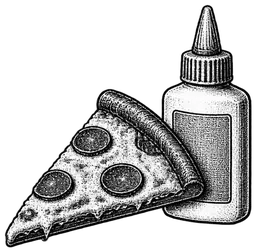
    Glue on pizza

    Google’s new AI Overviews suggest, among other errors, adding glue to pizza sauce, apparently drawn from an old joke post.

    Sources and details

Plate VIII

The City of Errands

2024–2025

Models stop answering and start doing.

Reasoning models learned to think before answering. Agents operated desktops and browsers, a protocol let them plug into tools, and coding assistants began shipping software.

Capital followed: data-center projects measured in hundreds of billions, and a new word in company names: superintelligence.

  1. Company & funding, Safety

    Safe Superintelligence Inc.

    Ilya Sutskever, Daniel Gross and Daniel Levy found SSI, “the world’s first straight-shot SSI lab”. It is the first major lab named for superintelligence.

    Sources and details
  2. Policy

    The EU AI Act enters into force

    The world’s first comprehensive AI law enters into force, with obligations phased in over the following years.

    Sources and details
  3. Model release

    OpenAI o1: models that reason

    OpenAI releases o1, trained to spend more computation “thinking” before it answers.

    Sources and details
  4. Quotes & culture, Research

    Nobel prizes for AI

    The Physics prize goes to John Hopfield and Geoffrey Hinton for neural networks; the next day the Chemistry prize goes to David Baker, Demis Hassabis and John Jumper for protein design and structure prediction.

    Sources and details
  5. Agents & assistants

    An AI uses a computer

    Anthropic releases “computer use” in beta: Claude can look at a screen, move a cursor and type.

    Sources and details
  6. Agents & assistants

    Model Context Protocol

    Anthropic open-sources MCP, a standard for connecting AI assistants to tools and data sources. It is later adopted widely across the industry.

    Sources and details
  7. Quotes & culture

    “Superintelligence in the true sense of the word”

    In a blog post, Sam Altman writes that OpenAI is beginning to turn its aim beyond AGI, to superintelligence.

    “We are beginning to turn our aim beyond that, to superintelligence in the true sense of the word.”

    Sam Altman, “Reflections”, January 2025
    Sources and details
  8. Model release

    DeepSeek-R1

    Chinese lab DeepSeek releases an open-weight reasoning model reportedly trained at a fraction of rivals’ cost; on 27 January Nvidia shares fall sharply.

    Sources and details
  9. Company & funding, Hardware

    The Stargate Project

    OpenAI, SoftBank, Oracle and MGX announce a venture committing up to $500 billion to US AI infrastructure.

    Sources and details
  10. Agents & assistants

    Operator browses for you

    OpenAI launches Operator, an agent that uses its own web browser to complete tasks.

    Sources and details
  11. Quotes & culture

    “Vibe coding”

    Andrej Karpathy describes “vibe coding”: fully giving in to the AI and forgetting that the code even exists.

    Sources and details
  12. Agents & assistants, Model release

    Claude 3.7 Sonnet and Claude Code

    Anthropic releases a hybrid reasoning model and Claude Code, an agent that works in a developer’s terminal.

    Sources and details
  13. Quotes & culture

    “The Gentle Singularity”

    Sam Altman writes that humanity is past the event horizon and that the takeoff has started.

    “We are past the event horizon; the takeoff has started.”

    Sam Altman, June 2025
    Sources and details
  14. Company & funding

    Meta Superintelligence Labs

    Meta reorganises its AI work under Meta Superintelligence Labs, led by Alexandr Wang and Nat Friedman, after a $14.3B investment in Scale AI.

    Sources and details
  15. Research

    Gold-medal level at the IMO

    Experimental systems from Google DeepMind and OpenAI solve five of six International Mathematical Olympiad problems, reaching gold-medal standard.

    Sources and details
  16. Quotes & culture

    “Personal Superintelligence”

    Mark Zuckerberg publishes a letter arguing for superintelligence in the hands of every individual rather than one central system.

    Sources and details
  17. Model release

    GPT-5

    OpenAI releases GPT-5. Reception is mixed and the company restores GPT-4o for paying users within days.

    Sources and details
  18. Policy

    California SB 53

    California enacts the first US state law specifically addressing catastrophic risk from frontier AI models.

    Sources and details
  19. Safetylow: sources disagree

    Statement on Superintelligence

    A statement hosted by the Future of Life Institute calls for a prohibition on developing superintelligence until there is broad scientific consensus it can be done safely and strong public buy-in.

    Sources and details

Plate IX

The Ascent

2025–2026

Labs declare new eras; a government renames the technology.

Labs restricted their most capable models to vetted partners for security work, governments briefly blocked and then restored access, and one company declared “the AGI era”.

On 29 September 2026 a US executive order told federal agencies to say “Super Intelligence (SI)” instead of “Artificial Intelligence (AI)”. A word coined for minds far beyond ours became a label for today’s software.

  1. Company & funding

    Microsoft’s superintelligence team

    Mustafa Suleyman forms the MAI Superintelligence Team at Microsoft, framing its goal as “humanist superintelligence”, starting with medical diagnosis.

    Sources and details
  2. Model release, Safety

    Claude Mythos and Project Glasswing

    Anthropic discloses Claude Mythos and gives selected organisations access through Project Glasswing to find vulnerabilities in critical software.

    Sources and details
  3. Policy

    Access to frontier models restricted, then restored

    A US government letter bars non-US nationals from Mythos 5 and Fable 5; Anthropic suspends access, and restrictions are lifted on 30 June.

    Sources and details
  4. Model release

    GPT-6 Astra and “the AGI era”

    OpenAI launches GPT-6 Astra. President Greg Brockman says “Welcome to the AGI era”, a framing the company left users to judge.

    Sources and details
  5. Agents & assistants

    Meta Muse

    Meta launches Muse, an AI agent for everyday tasks.

    Sources and details
  6. Policy

    “AI” becomes “Super Intelligence”

    A US executive order directs federal agencies to use “Super Intelligence (SI)” instead of “Artificial Intelligence (AI)” in non-statutory communications. The relabel applies to the existing legal definition of AI, not to the research meaning of superintelligence.
    “It's not artificial.”

    Donald Trump, 29 September 2026
    Sources and details
  7. Agents & assistants

    OpenAI Dots

    OpenAI releases GPT-6.1 Sol and launches Dots, a personal AI agent system.

    Sources and details

Plate X

Terra Incognita

Here the record ends. The fog moves back a little every time something new happens.

Your prediction is stored only in this browser. It is never sent anywhere.

i own super intelligence.